What is Metal
When we study the elements, it is important to know which elements are metals and which ones are not. If you are trying to learn to distinguish between metals and non-metals, a list and their uses is a good way to break them down and help memorize the difference between the two. The good news is that most elements are metals. A useful way to approach the study of elements is to distinguish whether they are metal or non-metal. Metals share some common properties. So, knowing what are those properties is a good way to begin our study.
Most metals have a solid state when they are at room temperature. Another way to recognize a metal is that they tend to be shiny. Metals also tend to be a good conductor of heat and electricity. But have low ionization energies and low electronegativities. Another important property that many metal elements share is that they are malleable. This means that metals are relatively easy to be broken up into sheets. Also, most metals can be made into wire. This is what we know as being ductile. With the exception of potassium, lithium, and sodium, most metals have a high density. One of the common and, perhaps, most noticeable properties that most metal elements share is that they corrode when exposed to seawater or air. Finally, most metal elements lose electrons during reactions.
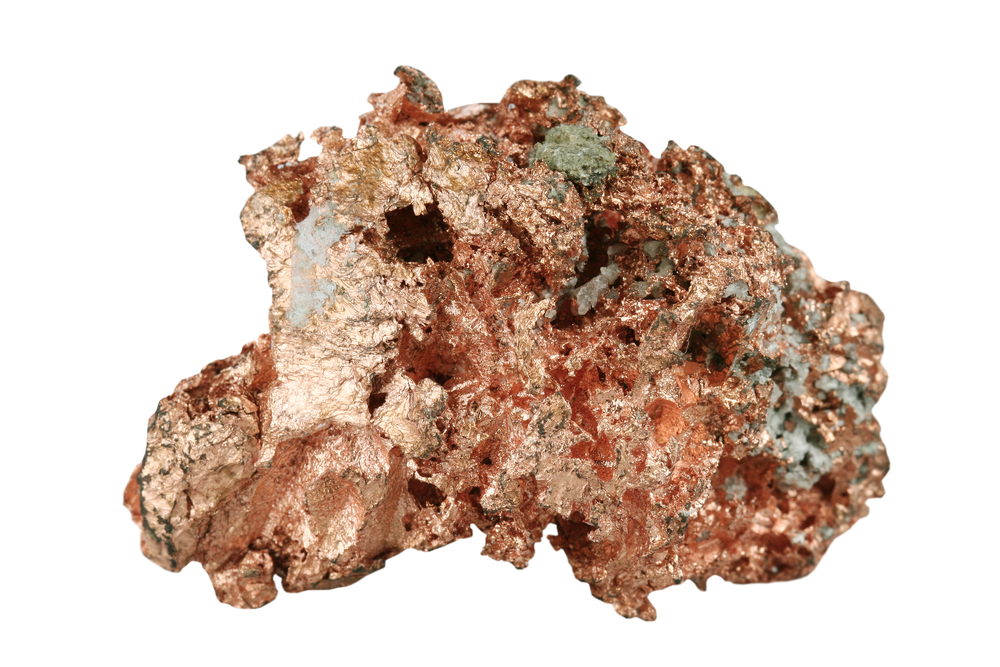
Cooper
Copper is a chemical element with the symbol Cu (Latin: cuprum) and atomic number 29. It is a ductile metal with excellent electrical conductivity and is rather supple in its pure state and has a pinkish luster which is (beside gold) unusual for metals which are normally silvery white. It finds use as a heat conductor, an electrical conductor, as a building material, and as a constituent of various metal alloys. Copper is an essential trace nutrient to all high plants and animals. In animals, including humans, it is found primarily in the bloodstream, as a co-factor in various enzymes, and in copper-based pigments. However, in sufficient amounts, copper can be poisonous and even fatal to organisms.
Cobalt
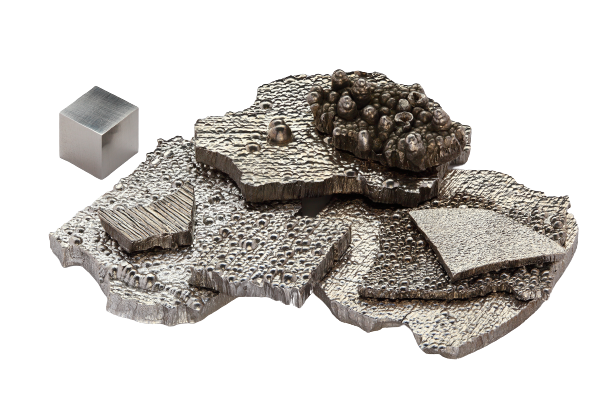
Cobalt is a chemical element with the symbol Co and atomic number 27. As with nickel, cobalt is found in the Earth’s crust only in a chemically combined form, save for small deposits found in alloys of natural meteoric iron. The free element, produced by reductive smelting, is a hard, lustrous, silver metal.
More than 70 percent of the world’s cobalt is produced in the Democratic Republic of the Congo (DRC), and 15 to 30 percent of the Congolese cobalt is produced by artisanal and small-scale mining (ASM).
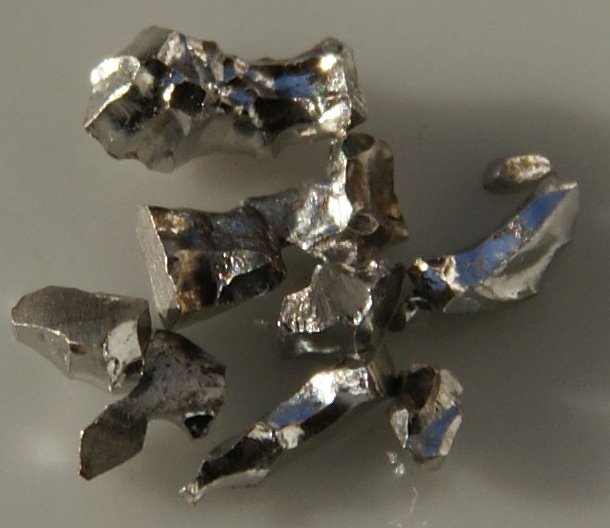
Californium
Californium is a synthetic radioactive element found on the bottom row of the periodic table, along with other actinides. It was first discovered in 1950 at the University of California Radiation Laboratory in Berkeley by bombarding curium with alpha particles (helium nuclei). Pure californium metal has a silvery-white appearance and is soft enough to be easily cut with a razor blade.
Initial experiments with californium in its concentrated form began in 1958. Since then, 20 isotopes of californium have been characterized, with mass numbers ranging from 237 to 256. One of these isotopes is californium-252, which was first isolated from a neutron-irradiated sample of plutonium-239. As an exclusively synthetically made element (it cannot be found in nature), californium-252 is very rare and is produced via neutron bombardment in high flux isotope reactors or particle accelerators.
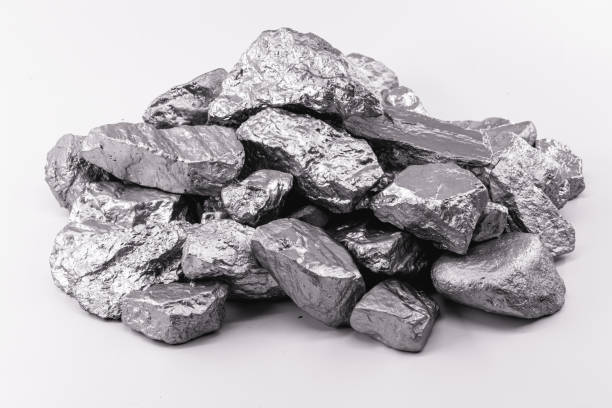
Mineral
Minerals are solid, naturally occurring inorganic substances found in the Earth’s crust. They have a unique chemical composition and crystal structure.
Metals are elementary substances, such as gold, silver and copper. They are crystalline when solid and naturally occur in minerals. They are often good conductors of electricity and heat, shiny and malleable. The metals we use day-to-day are converted from metallic ores to their final form. This usually requires the use of chemicals and special technology.
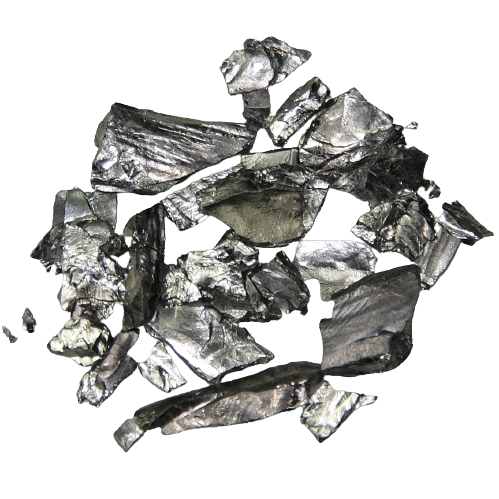
Iridium
Iridium is a chemical element with the symbol Ir and atomic number 77. A very hard, brittle, silvery-white transition metal of the platinum group, it is considered the second-densest naturally occurring metal (after osmium) with a density of 22.56 g/cm3 (0.815 lb/cu in) as defined by experimental X-ray crystallography. It is one of the most corrosion-resistant metals, even at temperatures as high as 2,000 °C (3,630 °F). However, corrosion-resistance is not quantifiable in absolute terms; although only certain molten salts and halogens are corrosive to solid iridium, finely divided iridium dust is much more reactive and can be flammable, whereas gold dust is not flammable but can be attacked by substances that iridium resists, such as aqua regia.
Iridium was discovered in 1803 among insoluble impurities in natural platinum. Smithson Tennant, the primary discoverer, named it after the Greek goddess Iris, personification of the rainbow, because of the striking and diverse colors of its salts. Iridium is one of the rarest elements in Earth’s crust, with annual production and consumption of only 3 tonnes (6.6 thousand pounds). 191Ir and 193Ir are the only two naturally occurring isotopes of iridium, as well as the only stable isotopes; the latter is the more abundant.